





Kindly Sponsored by:


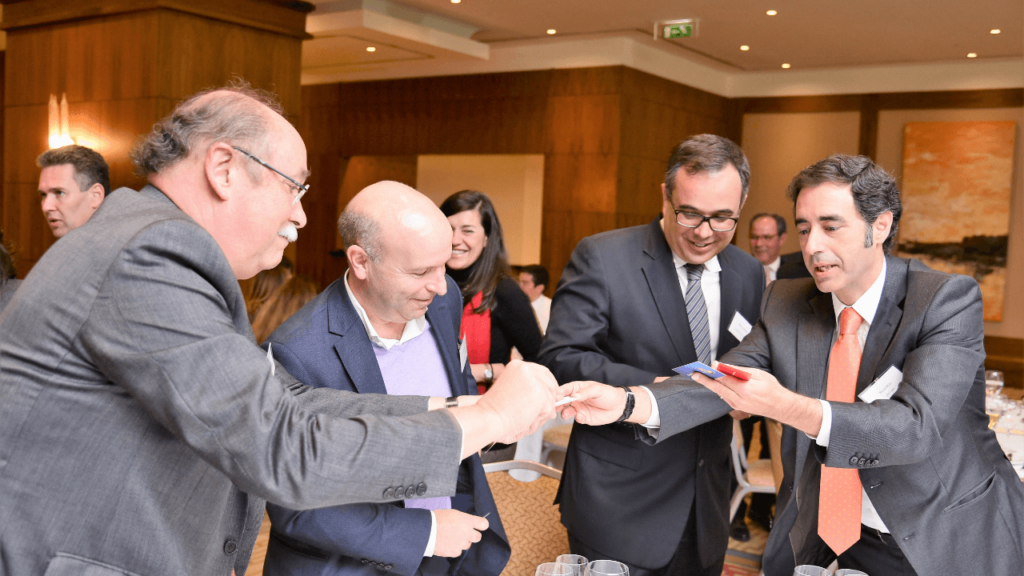
The British-Portuguese Chamber of Commerce once again hosted a thought-provoking lunch, this time at the elegant Hotel Santiago de Alfama. Twenty professionals from a diverse range of sectors — spanning fashion, advertising, photography, journalism, art, and education — came together to explore a theme as timeless as it is timely: The Power of the Image, introduced by the Chamber’s CEO, Chris Barton.
I had the pleasure of opening the discussion with an arresting statistic: only 7% of personal communication is verbal. A remarkable 93% is non-verbal — where image, in its many forms, plays a leading and transformative role. With this in mind, our conversation unfolded with insight and curiosity.
What followed was a dynamic and wide-ranging exchange. We examined how art shapes perception and how artificial intelligence is fast becoming the defining force of our visual age. This gave rise to urgent questions around authenticity, manipulation, and trust — and the increasingly blurred lines between fact and fiction in a world curated by algorithms.
One recurring theme was the need for critical thinking as a core skill — both socially and legally — to navigate this evolving visual landscape. There was a palpable interest in the resurgence of “old school” values: analogue aesthetics, raw visuals, and a return to simplicity. These shifts are already being embraced by brands, as illustrated by Canon’s André Ferreira.
Photography’s impact — and the complex question of authorship in the digital age — sparked deep reflection. The younger generation’s enthusiastic embrace of new technologies raised concerns about ethics and legal accountability, voiced especially clearly by lawyer Adolfo Mesquita Nunes.
As the conversation deepened, it took on a sociological and even anthropological tone. Are we chasing innovation through image, or rebelling against a homogenised mainstream? Insights from photographer Kenton Thatcher and muralist Jacqueline de Montaigne provided a creator’s perspective, reinforcing the vital role of critical thought in keeping image meaningful and intentional.
The word manipulation echoed throughout — not only in the context of technology, but also in marketing, where the fine line between persuasion and integrity becomes ever more complex. How can we harness the power of the image to convince — without deceiving?
By the close of lunch, one conclusion stood out: AI’s impact on imagery is a cross-sector concern. While the conversation often strayed beyond the image itself — into ethics, law, art, and philosophy — these detours only enriched the debate.
As with all great BPCC events, we knew where we began, but not where we would end. What we do know is this: we live in a world of images — powerful, disruptive, and unpredictable. And to understand where we’re heading, we may well need a crystal ball.
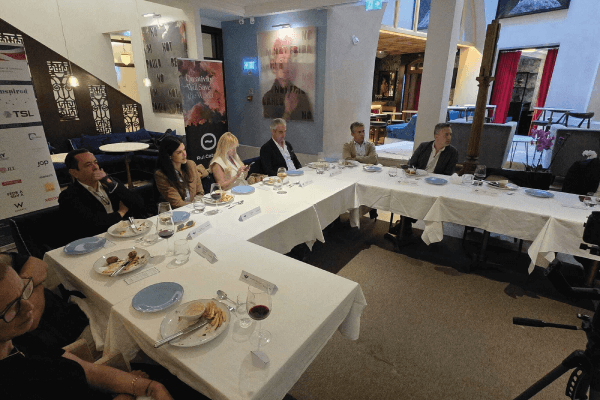

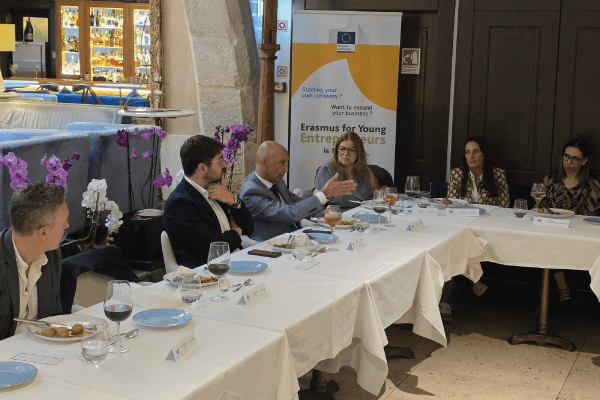
Participants
Text:
Rui Catalão
Rui Catalão Atelier