






Kindly Sponsored by

Given the technological revolution underway and the environmental crisis of our age, how should a new school be designed to best educate the next generation?
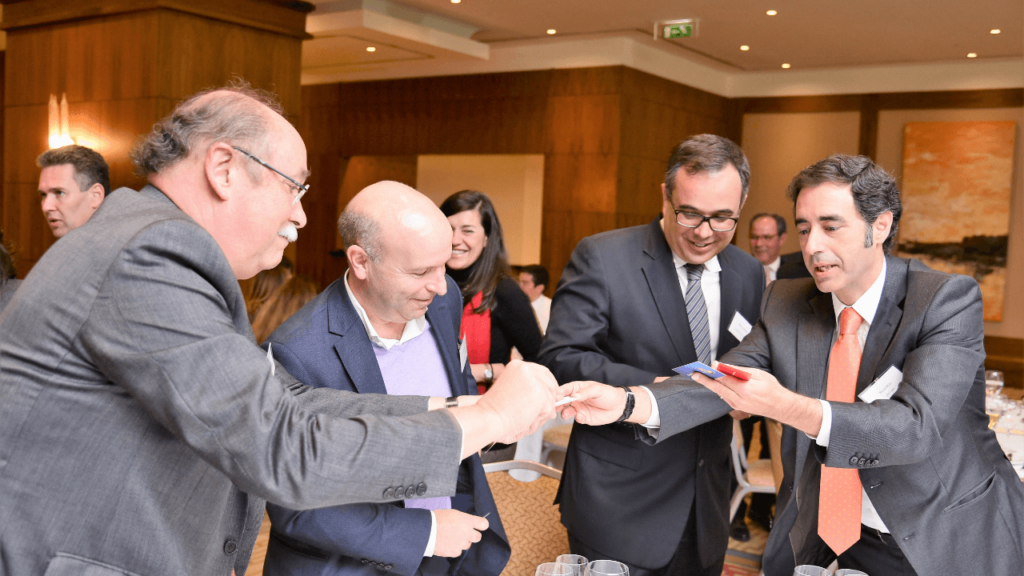
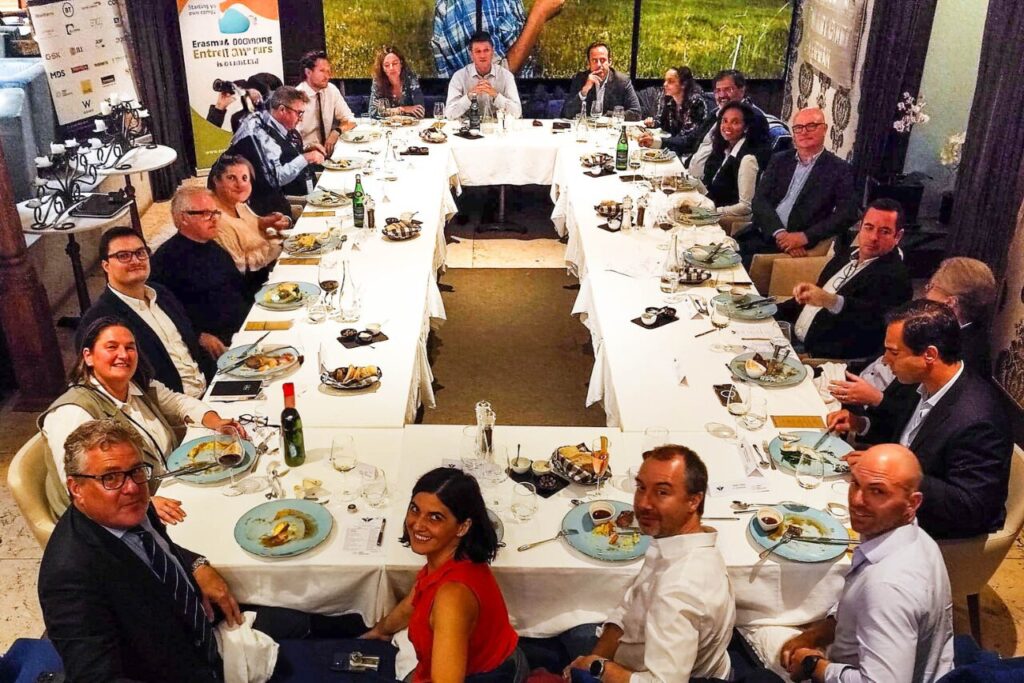
On October 16th 2024, I had the pleasure of attending my first “brainstorming think-tank lunch” organised by Chris Barton, CEO of the British-Portuguese Chamber of Commerce. The setting? The charming Santiago Hotel in Alfama, right in the heart of Lisbon. More than 20 participants, including representatives from schools, education-related companies, and architecture firms, were present at the event, which was much more than just a lunch! It was an excellent opportunity to discuss a topic particularly dear to me: education.
The first pleasant surprise came with the approach taken on the theme previously proposed by Allan Etherton from Cheltenham College. While many participants, myself included, expected a discussion focused on curriculum design, others were more interested in the design of school spaces, exploring the relationship between architecture and education. This latter approach ended up dominating much of the discussion, though other equally important topics were also addressed.
How does architectural design impact learning?
Several perspectives were explored. From the architectural design of schools, with examples of more recent international schools in Lisbon and traditional institutions like St. Julian’s, to the connection of buildings with the environment, whether through the integration of natural spaces or adapting to urban contexts. The organization of spaces to accommodate diverse activities, the use of sustainable materials and the adaptation of buildings to interdisciplinary teaching models, such as Project-Based Learning widely used in Norwegian schools, were also highlighted.
Two critical points were raised regarding the construction or adaptation of school spaces: the difficulty in altering structural elements after a building is completed and the budget constraints that often arise in the final stages of projects, frequently resulting in cuts to finishes. These limitations can restrict a school’s ability to adapt to the emerging needs of both society and education.
Some examples shared during the discussion effectively illustrated the impact of architecture on schools: the transformation of the declining Beloura Shopping into a modern school, and the open campus of Nova SBE in Carcavelos, designed to engage with the community.
“The details matter so much” – highlighted Jessica Ordovas from The Schools Trust. And I couldn’t agree more!
The collaboration between architects, designers, and educators is a recipe for generating valuable and innovative insights for the future of education. One example cited was a school in Japan where innovative design excellently supports pedagogical goals.
Some key ideas emerged from the various opinions shared:
- Education is essential for societal progress and should go beyond academic learning.
- The role of education is multifaceted: beyond the academic component, it must foster the development of social and emotional skills, and it is vital to consider the integration of emotional learning into curriculums.
- Constant adaptation to societal changes is not optional—it is indispensable.
And where does technology fit in?
Another central theme of the discussion was the use of technology in schools. Most schools still prohibit the use of smartphones, with the point being made that mobile phones are not “technology” in themselves, but rather devices to consume technology. However, the question of how we can educate students for the conscious and effective use of new technologies remained somewhat unexplored. Perhaps a topic for the next gathering?
International schools in Portugal: the boom
In recent years, we’ve witnessed a remarkable growth of international schools, especially in Lisbon. However, in the north of the country, there is still a shortage of good international and private schools.
In Lisbon, schools face several challenges, such as reduced financial margins—a consequence of relatively low tuition fees in the country and the lack of a corporate culture of funding the education of expatriates’ and employees’ children. Furthermore, the absence of published data on market capacity makes it difficult to predict growth trends. Another critical challenge is accommodation for teachers, considering the current high real estate prices.
And what is the impact of these schools on the community?
As we moved on to dessert, the topic of the impact of international schools on local communities came up. Schools should be seen as social elevators, with the responsibility to expose students to new realities and experiences. Sports were highlighted as a powerful tool to strengthen these connections.
To wrap up… a reflection
The world is changing at a dizzying pace, and we in education must be ready to keep up. The challenges are many and varied, but events like this show that solutions can only emerge through collaboration across sectors and people. Debate and the exchange of ideas must be at the heart of it all.
Thank you, British-Portuguese Chamber of Commerce, for your inspiring contribution!
Company | Guest | URL |
| British-Portuguese Chamber of Commerce | Chris Barton | www.bpcc.pt |
| Pedra Silva Architects | Luís Silva | www.pedrasilva.com |
| Telles | João Luís Araújo | http://www.telles.pt |
| Cheltenham College | Alan Etherton | www.cheltenhamcollege.org |
| The Schools Trust | Jessica Ordovas | www.schoolstrust.co.uk |
| British School of Lisbon | Stephen Spicer | https://britishschool.pt |
| Brave Generation Academy | Terry Hamill | https://bravegenerationacademy.com/ |
| King’s College School, Cascais | Adrian Frost | www.cascais.kingscollegeschool.pt |
| CAISL | Nate Chapman | www.caislisbon.org |
| British Council | Richard Fleming | www.britishcouncil.pt |
| Nova SBE | Jessica Carvalho Cunha | www.novasbe.pt |
| United International School of Lisbon | Martin Harris | https://www.unitedlisbon.school |
| Knightsbridge – Education and Training Centre | Lucy Bravo | http://www.knightsbridge.com.pt |
| Nova SBE / Shaken not Stirred | Mafalda Mendonça | https://shaken.pt/ |
| A+ Architecture | Pedro Clarke | www.a-architecture.org |
| Posto Nove | André Ferreira | www.posto9.pt |
| Greene’s Tutorial College | Miguel Marques da Gama | www.greenes.pt |
| The Inventors | José Malaquias | www.theinventors.io |
| Edu4WORD Programas Educacionais | Afonso Couto Leitão | www.edu4word.com |
| St Julian’s | Paul Morgan | www.stjulians.com |
| St Julian’s | Adela Metaxa | www.stjulians.com |
| United Lisbon Education Hub, S.A. | Roman Stern | http://www.eduhublisbon.com |
| Redbridge International School | Hélène Dubourdieu | https://redbridgeschool.com/ |
Jessica Carvalho Cunha, Head of Program Development, Nova SBE